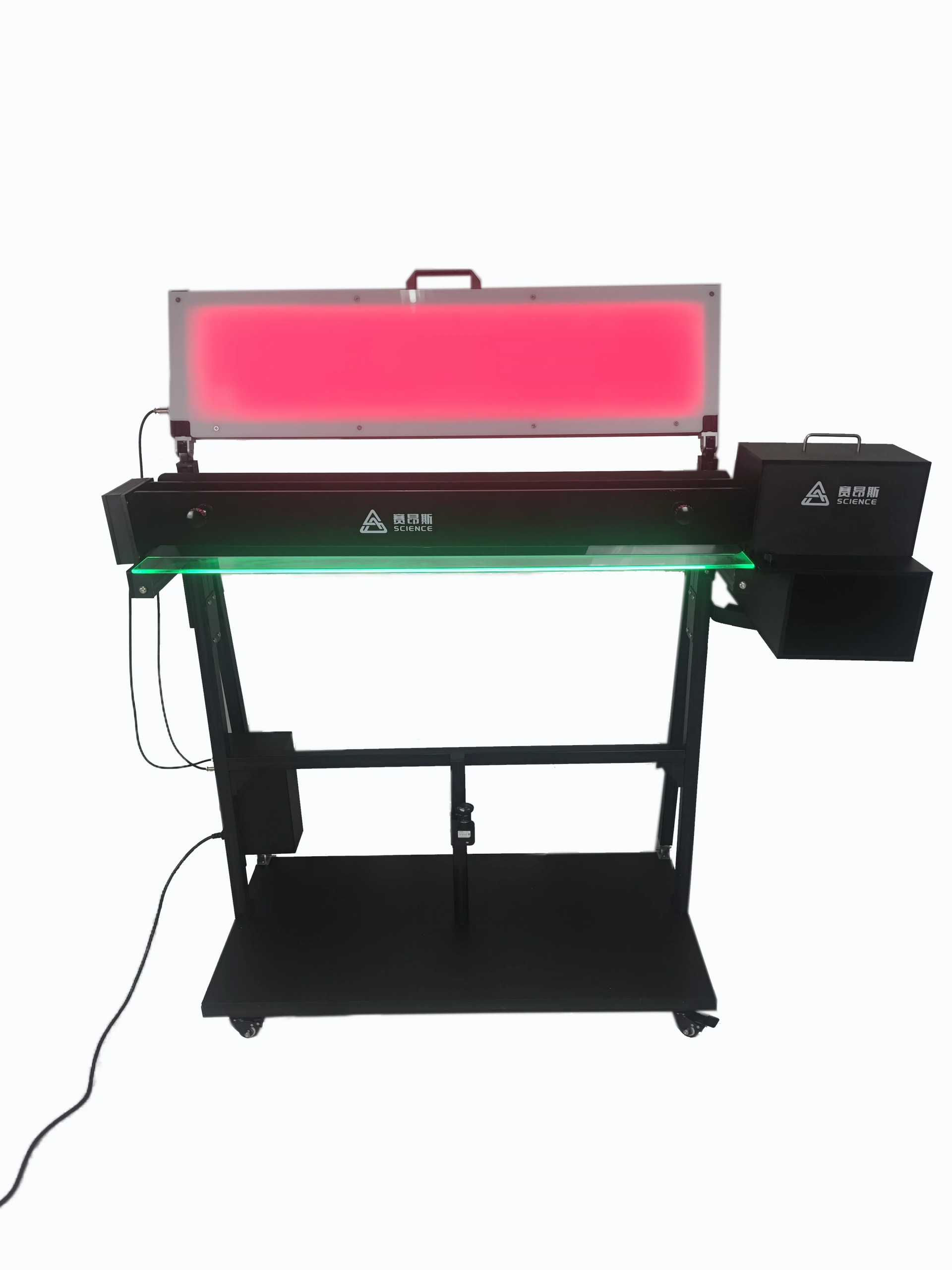
Establishing a controlled setting is the first requirement for obtaining reproducible data in rodent locomotor studies. BPLabLine emphasizes that a gait analysis mouse setup must minimize external stressors, such as sudden noises or intense lighting, which can skew the natural movement patterns of the subject. They provide a specialized rodent gait analysis system designed to capture high-speed video from a ventral perspective. By utilizing this technology, researchers can observe a gait analysis mouse in a way that quantifies step cycles and coordination with extreme precision. They note that the consistency of the testing surface is just as vital as the atmospheric conditions, as any irregularity in the walkway can lead to compensatory movements that do not reflect the true neurological or musculoskeletal state of the animal.
Lighting and Contrast Parameters
Illumination plays a central role in how a gait analysis mouse interacts with the testing apparatus. They explain that the BPLabLine system uses frustrated total internal reflection (fTIR) technology to highlight the footprints of the gait analysis mouse as they make contact with the glass plate. This method requires a dark or dimly lit room to ensure that the contrast between the paw contact and the background is maximized. They have found that when a gait analysis mouse is tested under these specific optical conditions, the automated software can accurately distinguish between the forepaws and hindpaws. This level of clarity is necessary for calculating indices like the sciatic function index or limb swing speed, which are common metrics in rat gait analysis as well.
Walkway Dimensions and Speed Regulation
Spatial constraints significantly influence the velocity and stride length during a rat gait analysis. They observe that a walkway must be long enough to allow the animal to reach a steady-state speed, yet narrow enough to prevent the animal from turning around mid-trial. In rat gait analysis, maintaining a constant speed is essential because many gait variables are velocity-dependent. BPLabLine provides adjustable corridors that can be tailored for either a larger rat gait analysis or a smaller mouse study. By restricting the lateral movement of the subject, they ensure that the rat gait analysis captures linear progression, which simplifies the calculation of base of support and stride frequency.
Software Integration and Data Processing
Data acquisition represents the final stage of creating an optimal testing environment. They integrate sophisticated algorithms into their hardware to process the high-speed footage generated during a rat gait analysis. Because rat gait analysis involves complex limb-coordination patterns, the software must be able to filter out non-gait behaviors such as grooming or rearing. BPLabLine ensures that their system provides real-time feedback, allowing researchers to determine immediately if a trial meets the inclusion criteria for a rat gait analysis. This rapid processing reduces the total time the animal spends in the testing area, further minimizing the impact of fatigue on the scientific results.
Reliable scientific insights depend on the rigorous standardization of every testing variable. By focusing on the physical and technical aspects of the laboratory environment, researchers ensure that their data truly reflects the physiological conditions of the subjects. BPLabLine continues to support the scientific community by offering the precise instrumentation required for both mouse and rat gait analysis. These specialized tools allow for a comprehensive evaluation of motor function that can be replicated across different laboratory settings.
