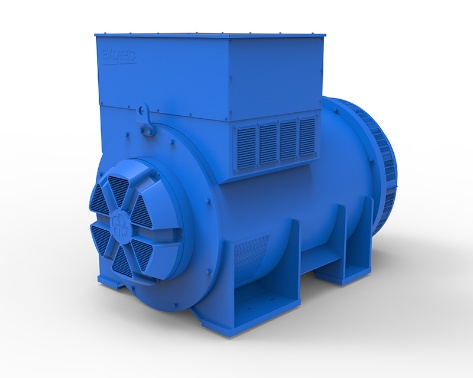
In high‑capacity industrial power systems, sustaining stable output voltage under severe transient load variations constitutes a key engineering performance metric. Heavy-duty applications—ranging from continuous utility microgrids and remote mining operations to large manufacturing plants—depend on robust electrical machinery that can immediately adapt to dynamic power demands. While the prime mover supplies raw rotational torque, the alternator head performs the crucial task of converting that mechanical energy into clean, grid-compliant electrical power.
At the core of this power-conversion process is the digital Automatic Voltage Regulator (AVR), which governs excitation-field dynamics. Partnering with specialized component developers like EvoTec Power allows power system equipment packagers to harness advanced digital excitation technology, ensuring rapid transient response, superior operational longevity, and voltage stability across mission-critical power installations worldwide.
Dynamic V/Hz Matching Prevents Core Magnetic Saturation
Prime movers such as heavy industrial diesel engines and gas turbines routinely experience momentary rotational speed drops during sudden load acceptance, engine ramp-up, or low-speed idle operations. Under traditional static excitation regimes, attempting to maintain full rated terminal voltage at sub-nominal operating frequencies severely forces magnetic flux through the iron core.
This condition leads directly to magnetic saturation, excessive core thermal buildup, and accelerated insulation breakdown within the electrical windings. Modern digital AVR systems mitigate this physical risk by implementing continuous Volts-per-Hertz (V/Hz) characteristic tracking.
By dynamically lowering output voltage in exact proportion to frequency dips, the digital controller preserves the ideal flux density within the magnetic circuit. Incorporating this dynamic soft-under-frequency protection into a high-capacity 4 pole generator head protects the core iron from severe thermal stress. This dynamic software capability prevents output wave distortion and ensures smooth engine speed recovery following heavy step-load applications without damaging sensitive internal components.
Powerful Excitation Capability for Heavy Motor Group Startup
Direct-on-line starting of massive industrial induction motor clusters poses one of the most demanding transient electrical challenges for any 3 mw generator power assembly. When large electric motor groups start, they draw locked-rotor inrush currents up to six times their nominal rating, triggering sharp voltage dips across the main busbar. These voltage drops can trip sensitive control electronics or cause unplanned full-system shutdowns in heavy industrial sites.
To counteract severe reactive power spikes during motor startup, modern digital AVR hardware adopts high-voltage forcing logic supported by high-speed solid-state power switches.
Upon detecting rapid terminal voltage collapse, the AVR instantly elevates exciter field current far above steady-state operating limits to inject magnetic flux into the rotor. As a premium high-power alternator solution for 3 mw generator configurations, the EvoTec EVO568 series delivers a factory-equipped ETC-2 AVR and covers a 50 Hz continuous power range of 3000–3750 kVA — perfectly matching standard 3 MW-class industrial power demands.
This aggressive excitation forcing stabilizes terminal voltage above critical trip thresholds during harsh transient loads. The fast voltage recovery enables heavy motor groups to accelerate smoothly without interrupting on-site industrial processes or introducing system-wide harmonic instability.
Precise Voltage Synchronization and Busbar Load Sharing
When multiple engine-alternator assemblies, including 4 pole generator configurations, operate in parallel to feed a shared power distribution busbar, precise excitation control becomes vital for maintaining overall system equilibrium. Unmatched terminal voltage levels or phase discrepancies between incoming machines cause circulating reactive currents, generating excessive thermal losses and triggering overcurrent protective relays. Digital AVR software solves this challenge by facilitating high-precision voltage matching and automated quadrature droop compensation during synchronization procedures.
Utilizing high-speed digital microprocessors, the excitation controller continuously monitors output parameters against the live busbar, executing real-time micro-adjustments to the rotor magnetic field prior to circuit breaker closure. Once tied to the common busbar, integrated reactive droop algorithms ensure balanced reactive power sharing among all connected units. This software-driven alignment allows system packagers to construct modular multi-megawatt power plants capable of seamless hot-swapping, load shedding, and flexible capacity scaling without manual operator intervention.
Seamless Integration with Relays and Industrial PLC Systems
Modern industrial facilities operate as fully networked digital environments where individual electrical components must communicate continuously with centralized supervisory hardware. In a 3 mw generator system, for example, advanced digital AVR units go beyond standalone voltage regulation by integrating directly into broader plant automation architectures via standardized digital communication protocols such as Modbus or CANbus. The excitation controller logically coordinates with field protection relays, including industry-standard MiCOM relays, to exchange real-time operational metrics, thermal logs, and diagnostic alarm states.
If an external short circuit or prolonged over-excitation event occurs, the digital AVR works in tandem with protective relays to execute controlled field de-excitation, isolating the fault before catastrophic thermal stress damages the stator or rotor windings. Furthermore, programmable input channels allow facility Programmable Logic Controllers (PLCs) to remotely fine-tune voltage setpoints, control VAR/Power Factor operating modes, and run automated diagnostic routines, creating an interconnected and highly reliable power generation infrastructure.
Elevating Power Quality Through Advanced Excitation Synergy
Stable operation under harsh industrial power‑network conditions relies on balanced electromagnetic design and digital control algorithms. By combining robust physical construction with dynamic digital AVR hardware and software synergy, power system packagers can conquer complex operational challenges, from severe motor starting surges to core saturation risks during low-frequency engine operation.
Utilizing specialized, high-capacity alternator heads ensures that every power conversion unit delivers optimal electrical performance, low harmonic distortion, and long-term structural durability. Working with an established component supplier gives equipment assemblers access to technical co-engineering support and reliable hardware. These resources help them operate within competitive B2B energy sectors and supply consistent, fit-for-grid power to critical infrastructure worldwide.
