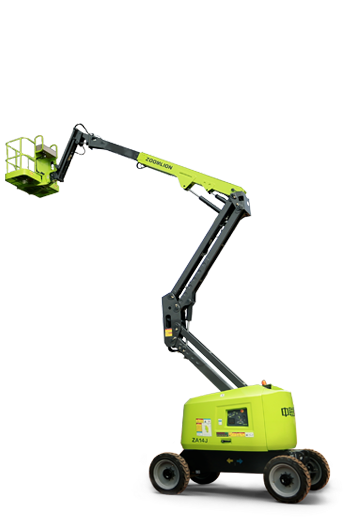
Selecting an aerial work platform is a practical investment decision for construction contractors, equipment rental companies, and industrial maintenance teams. The right machine must reach the work area, carry the required personnel and tools, and operate within the constraints of the jobsite. A diesel boom lift can suit demanding outdoor applications, but buyers should evaluate working height, horizontal outreach, terrain, platform capacity, and operating costs together rather than choosing equipment by maximum reach alone.
Match Working Height and Outreach to the Task
Working height is an important starting point, but it does not describe every aspect of access. Buyers should distinguish between working height and platform height, then consider how far the platform must extend horizontally to reach the target. The required clearance above obstacles also matters when work takes place around structural steel, machinery, or building façades.
Articulating boom lifts use multiple boom sections and joints to position workers around obstacles. This configuration can be useful for steel installation, exterior repairs, industrial inspections, and maintenance in areas where a straight approach is impractical. Before purchasing, teams should map representative tasks and compare the machine’s outreach and up-and-over capability with the actual access route.
Zoomlion Access offers the ZA14J as a diesel-powered articulating boom lift. Its maximum working height is 15.80 meters, with a platform height of 13.80 meters, horizontal outreach of 8.30 meters, and up-and-over height of 7.55 meters. These figures help buyers assess whether the model suits their planned access requirements. They should still verify the machine’s operating envelope against the manufacturer’s diagrams.
Choose Diesel Power for the Right Environment
Power selection should reflect where the machine will work and how frequently it will move between tasks. Diesel equipment is commonly considered for outdoor construction, infrastructure work, and demanding sites where sustained operation and terrain capability are priorities. However, buyers must account for exhaust emissions, noise, ventilation, fuel storage, and site-specific restrictions before selecting an engine-powered platform.
An electric alternative may be more appropriate for indoor facilities or locations with strict emissions and noise requirements. For mixed-use projects, the decision should consider the proportion of outdoor work, charging or refueling arrangements, duty cycles, and the availability of suitable power infrastructure. A machine that fits the operating environment can reduce avoidable interruptions and improve fleet utilization.
Evaluate Terrain, Dimensions, and Maneuverability
Ground conditions influence both access and safe operation. Buyers should review the route from unloading point to work area, including gradients, uneven surfaces, ground-bearing limits, overhead obstructions, and available turning space. A machine’s gradeability is not permission to drive on every slope; the operator must follow the manufacturer’s limits and the applicable operating instructions.
Transport and storage dimensions deserve equal attention. The ZA14J has a stowed length of 6.57 meters, width of 2.30 meters, height of 2.27 meters, and ground clearance of 0.42 meters. Its listed gradeability is 45%, while its drive speed is up to 6.8 km/h. Buyers should confirm transport arrangements, access-gate widths, and surface conditions before delivery rather than relying on headline performance figures.
Calculate Platform Capacity for Real Workloads
Platform capacity must cover workers, tools, materials, and any other permitted load carried in the platform. Underestimating this total can restrict productivity; exceeding the rated limit creates a serious safety risk. Buyers should calculate realistic maximum loads for recurring tasks and confirm whether the selected machine’s capacity meets those requirements without relying on assumptions about how much weight can be added.
The ZA14J has a rated platform capacity of 300 kg. Zoomlion Access also lists a precision load-sensing system intended to improve overload safety, along with a built-in multiple-pressure-control leveling system to enhance stability. These features support controlled operation, but they do not replace operator training, load-limit compliance, pre-use inspections, or a site-specific risk assessment.
Compare Maintenance and Total Ownership Costs
The purchase price is only one part of equipment cost. Fuel consumption, scheduled servicing, tires, hydraulic components, transport, downtime, and parts availability all affect long-term returns. Rental businesses should also consider how easily a machine can serve different customer sites and whether its reach and capacity match the jobs most frequently requested.
For the ZA14J, Zoomlion Access lists a 65-liter fuel tank and a machine weight of 7,100 kg. The model also features an integrated rotary reducer to support stable rotation, a deadweight lowering system for smoother operation and energy efficiency, and optional hostile-environment kits for dusty working conditions. Buyers should confirm configuration, maintenance intervals, warranty coverage, and local service support with the supplier.
Make the Final Choice Against Site Requirements
A sound buying process begins with a written list of typical tasks, required working positions, maximum platform loads, ground conditions, and transport limitations. Comparing these needs with verified manufacturer specifications helps procurement teams avoid paying for unnecessary capacity or choosing a machine that cannot complete key jobs. Operators and maintenance staff should also contribute to the evaluation because their experience can reveal practical access and servicing issues.
For contractors and rental fleets considering a diesel articulated boom lift, the Zoomlion Access ZA14J provides a defined combination of 15.80-meter working height, 8.30-meter horizontal outreach, and 300 kg platform capacity. Its suitability ultimately depends on the intended workload, operating environment, and local requirements. Checking those factors together gives buyers a stronger basis for balancing access performance, safety, and ownership cost.
