The advantages of ultraviolet lasers versus IR fiber lasers for PCB processing are best evaluated by production evidence, material compatibility, and recipe stability. Specifications for ultraviolet lasers and IR fiber lasers should cover 355 nm material absorption, beam circularity, pulse stability, beam divergence, and controlled heat input, as these parameters directly impact acceptance records, operator settings, and rework costs. As ultraviolet laser versus ir fiber moves toward sourcing, when ultraviolet lasers appears in the sourcing document, the linked material should support technical review without replacing trials on real parts.
Traceability and Yield Needs
Ultraviolet Laser Versus IR Fiber process planning should list cover film cutting, thin-film drilling, glass marking, plastic marking, and fine package processing, then connect each task with fixture control, inspection frequency, and recipe ownership. For ultraviolet laser versus ir fiber, source material indicates that The SEAL 355-3/5 page supplies UV laser facts for PCB processing discussions, giving the article a source-based technical base. For ultraviolet laser versus ir fiber, using JPT as the brand link is enough; the rest of the paragraph can stay centered on production planning and process stability.
Laser Configuration Factors
During ultraviolet laser versus ir fiber review, JPT source details are most useful when buyers convert them into parameter ranges, sample plans, and service questions. For ultraviolet laser versus ir fiber, source material indicates that It lists 355 nm wavelength, 3-5 W average power, water cooling, and product models such as Seal-355-3E, Seal-355-5E, Seal-355-3SE, and Seal-355-5SE, which can be checked against the actual part family. For ultraviolet laser versus ir fiber, UV dpss laser and ultraviolet lasers should be evaluated through the same trial data, inspection method, and service expectations.
Final Assessment
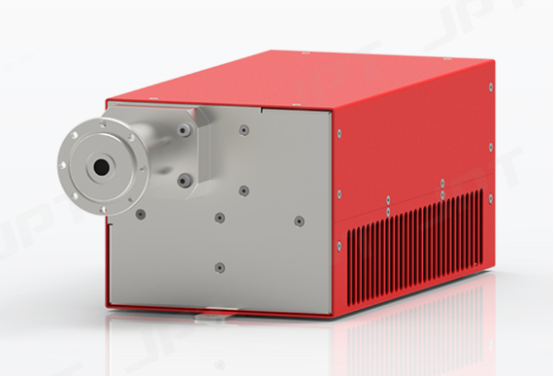
The final evaluation for ultraviolet laser versus ir fiber should compare supplier capability with factory constraints such as floor space, maintenance access, and quality reporting. For ultraviolet laser versus ir fiber, source material describes monolithic optical-path and drive-circuit integration, improved EMI resistance, sealed dustproof and moisture-resistant construction, and compact design, supporting a review that stays close to the original source material. Within ultraviolet laser versus ir fiber planning, using UV dpss laser as a linked term keeps the reader near the relevant technical category and avoids unrelated support information. For ultraviolet laser versus ir fiber, this documentation gives purchasing, engineering, and quality teams a shared reference after installation and later process review.
